
California is experiencing a historic drought and mandatory water restrictions went into effect across the state on June 1. While the percentage of cutbacks on potable (drinking) water vary depending on the water district, virtually all residential customers will be expected to conserve water, particularly potable water used for irrigating landscape.
To help you do your part, here are some steps you can take for saving water in your landscape:
Control Your Controller
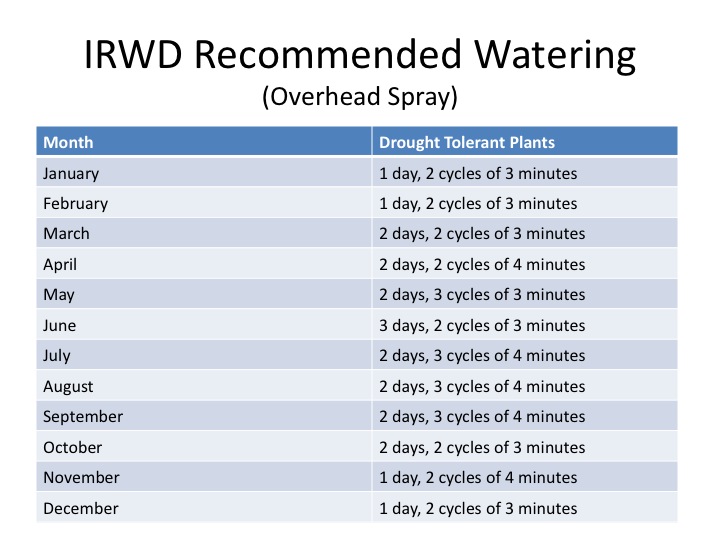
Your automatic sprinkler timer controls how often and how long your landscape is watered. Most of us rarely or never look at the controller and, therefore, have no idea how much water we’re using. Many water districts have recommendations on how long sprinklers should run each month based on the expected temperatures and weather. Below is my water district’s (Irvine Ranch Water District) recommended watering times by month for drought tolerant plants using an overhead spray sprinkler system. Adjust your sprinkler controller to follow these or your water district’s recommendations. If you don’t have the instructions for your controller, they can usually be found on the internet if you Google the manufacturer name and model number.
Cycle Your Sprinkler Times
To avoid runoff of precious water into the gutter, keep it on your property by cycling your sprinklers. This means dividing up the time you irrigate into two or more cycles. For example, in the table above, the July watering recommendation is to run 3 cycles of 4 minutes each for a total of 12 minutes of irrigation on each station. If the twelve minutes were run in a single cycle the water would most likely run off and not be absorbed. But by running 3 separate cycles, the water has an opportunity to soak in between cycles and results in deeper penetration into the soil.
Mulch, Mulch, Mulch!
Adding a 3″-4″ layer of mulch around plants slows evaporation and keeps moisture in the soil. It also regulates the soil temperature, suppresses weeds, and adds nutrients to the soil as it decomposes.
Modify Irrigation System
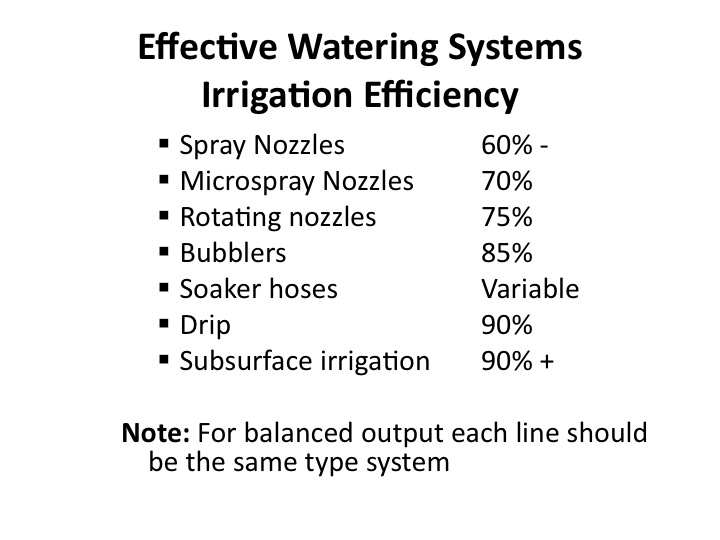
Traditional overhead spray sprinkler heads deliver only about 60% of the water to plants, the balance is lost to evaporation and runoff. By switching to more efficient delivery methods like rotating sprinkler heads or drip irrigation, more of the water you use actually gets to the plants. See the chart below for the efficiency of various systems.
Replace Water Hungry Plants
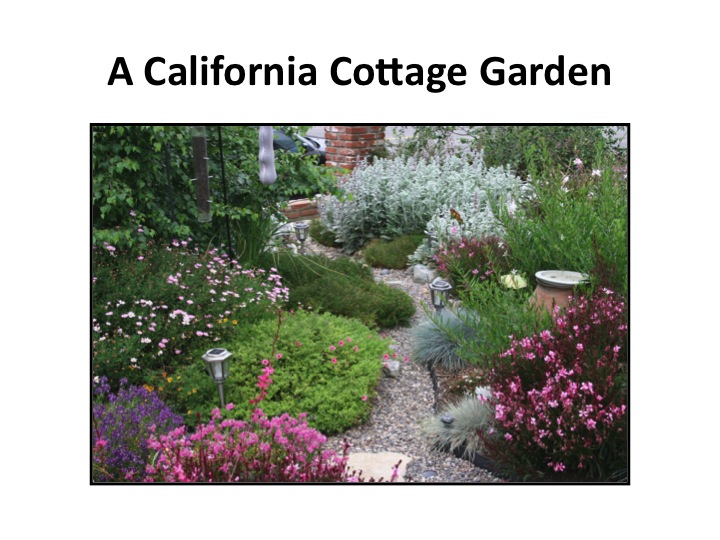
Did you know that cool season lawns need the equivalent of 66″ of rainfall a year? And southern California only gets on average 12″ a year! Average water use shrubs need about 28″ of water a year while low water use shrubs use about 11″ a year. So you can see why getting rid of lawns is such a good way to save water. As you can see from the photo below, landscapes without a lawn can be quite beautiful, too!
For more water saving tips visit the University of California’s Landscape Water Conservation and Management website.
Leave a Reply